Mezcal tastes of cooked agave, often with smoke, plus fruit, herbs, earth or minerals depending on the agave and the producer. The smoke is the famous part, but in a good mezcal it is one layer, not the whole story.
Why is mezcal smoky?
Because of how the agave is cooked. Traditionally, piñas are roasted for days in a pit oven: a hole in the ground lined with stones, heated with wood and covered with earth. The smoke and the caramelized agave end up in the spirit.
Is all mezcal smoky?
No. Mexico’s mezcal standard, NOM-070-SCFI-2016, sets three categories. Ancestral mezcal must use pit ovens; artisanal mezcal can use pit ovens or raised masonry ovens; and plain “mezcal” can also be cooked in autoclaves, which use steam and add little or no smoke. So the category on the label is a good clue to how smoky a bottle may be.
Is mezcal smoked?
Not like smoked meat. The agave is roasted with fire and smoke before fermentation; the finished spirit is not smoked.
The other flavors in mezcal
| Agave | Often described as |
|---|---|
| Espadín | Cooked agave, fruit, balanced smoke |
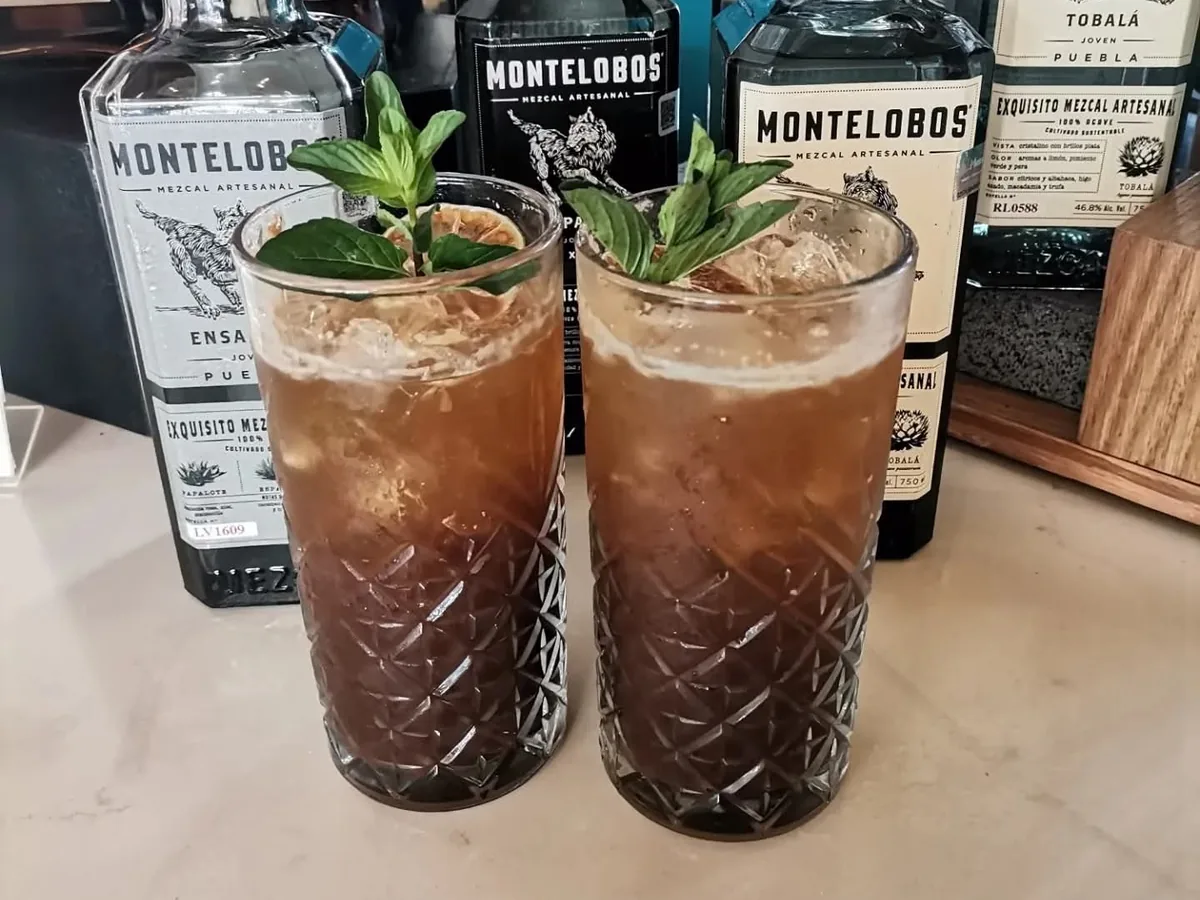
| Tobalá | Floral, fruity, delicate |
| Tepeztate | Green, spicy, intense |
| Ensamble (blend) | Layered, varies by producer |
These are common tasting notes, not rules: the producer, the region and the still change everything.
How to taste past the smoke
Sip small amounts at room temperature and wait for the second sip; smoke hits first, then fruit and herbs appear. Compare an espadín with a wild agave side by side.
Learn more in what is mezcal and mezcal vs tequila, or join a guided tasting in Cancún.
Frequently asked questions
What makes mezcal smoky?
Roasting the agave in a pit oven heated with wood. Autoclave-cooked mezcal has little or no smoke.
Is mezcal smoky in every bottle?
No. Check the category: ancestral and most artisanal mezcals use pit ovens; plain “mezcal” may use autoclaves.
Why does mezcal taste smoky but tequila doesn’t?
Tequila agave is usually cooked in brick ovens or autoclaves, which add little smoke.